
Stages of communication development between past and present.
the process of social communication has existed with the human from the beginning of existence, where it was initially simple and direct and was aimed at satisfying the basic human desires, and with the development of man, communication became more complicated something, until it reached what it is in modern times.
(1 ) . ( SearchTelecom, 2018)
Forms of communication in the past :
People were in different stages of time they are using different methods to communicate information including:
1- smoke
The huge smoke signs that rise in the air is the first means of communication used. They are used to convey news, report a dangerous event, or gather people in a particular place. This was done through a series of large fires. These markings form the symbol of clear and specific information.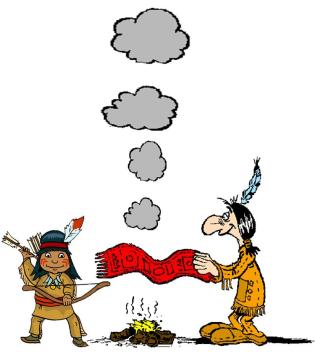
2-Homing Pigeon
This method was used by the Romans. Evidence of this method was used between Egypt and Syria during the year 1167 AD and was used extensively during World War I and World War II.

3-Written letters and letters
People have relied on messages as a means of communication and communication for centuries, but they were not a safe means of communication. The sender had to wait a long time to find someone who carried the message with him, as well as doubts about getting the message to its right destination first. The postal system, which was considered a secure and reliable messaging system, was created. The first post office was established in America in 1775 AD and was expanded and spread, and the means of transport used were the train.

4-Telegraph
In 1792 the telegraph was introduced in advance to people an easier and faster way to communicate among themselves. A wired system that transmits information across distances by breaking or marking electrical links.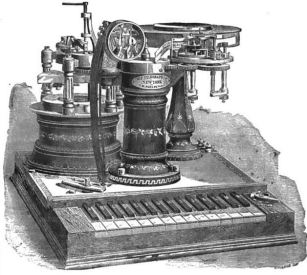
(2)(Messaging, 2018)
Video :
https://www.youtube.com/watch?v=0ay2Qy3wBe8
Communication in the 20th Century:

The Appearance of development and creativity in communication, which made it easier for people to communicate in all its forms (voice, image, video)
The development of modern technology began in the 20th century with the advent of computers in the 1940s, and the concept of networks that later gave birth to the idea of the Internet emerged. The first form of the Internet appeared in the 1960s. Twentieth, also in the 1980s invaded houses computer equipment, in 1997 was created the first social networking site, and in 1999 became the download of personal files and the formation of friendships on social networking sites.
(3) (Trends, Now and Hendricks, 2018).
Changing the concept of communication in business:
Through human creativity and development of means of communication, the task of doing business and tasks is not confined to a specific place, so it became possible for global companies, for example, the management of its work through modern means of communication is easier than the past.
Where many companies and individuals manage their business around the world through channels without meeting face-to-face.
For example:
The top 10 biggest virtual companies to date are:
-
Scopic Software – 230 employees.
-
Articulate – 169 employees.
-
10up.com – 120 employees.
-
Clevertech – 119 employees.
-
Basecamp – 114 employees.
-
Buffer – 112 employees.
-
X-Team – 104 employees.
-
Scrapinghub – 99 employees.
-
Zapier – 89 employees.
-
Collage.com – 77 employees.
-
Fire Engine RED – 70 employees.
These virtual companies use project management tools as an alternative to offices
Zapier divides Trello, and Scopic Software believes in their productivity through teamwork virtual companies use project management tools as an office substitute. Zapier swears by Trello, and Scopic Software trusts their productivity with Teamwork.
(4) .(Chatellier and Chatellier, 2018).
The importance of communication at the present time:
The communication process has become necessary for organizations. In the sense that no organization seeking to achieve its objectives can ignore the communication process, this confirms that many organizations have failed to achieve their objectives because the communication process is not sound.
The role of communication with the following points:
1- The large inflation in the organizations and the complexity of their divisions and the diversity of their functions led to the need and importance of the availability of a sophisticated system of relationships or communications that enable the connection between these parts and sections to ensure that the organization’s ability to perform their functions fully effective.
2-The competitive situation that occurs between the organizations led to increased focus and attention to the process of communication as the organization if it wants to be in the advanced and superior to competitors must remain vigilant and get all the information that helps in this and here highlights the importance of development and creativity in the process of communication that can Organizations to do so in order to obtain the required information.
(5).(Sst5.com, 2018).
At the end :
Communication has become essential in all parts of life and business success and achievement of goals must keep pace with development and creativity

 Creativity 10💫